
Researchers from IIT Guwahati and BHU have devised an eco-friendly biological method to treat textile wastewater, specifically targeting toxic azo dyes. Their novel bacterium, 'Brevundimonas sp. AJZ05', effectively degrades 98.50 per cent of Direct Blue-6 dye, producing non-toxic byproducts, offering a sustainable alternative to conventional chemical treatments.

Researchers at the Indian Institute of Technology (IIT), Guwahati, have developed an innovative nature-based wastewater treatment system utilising taro plants and an engineered "zig-zag flow" design. This low-energy, compact technology offers a promising solution for treating highly polluted swine wastewater in decentralised livestock farms, particularly in rural and resource-limited regions.
Researchers at BRIC-RGCB in Thiruvananthapuram have developed a novel nanopore-based sensing technology. This innovation allows for the early and highly sensitive detection of biomarkers associated with neurodegenerative diseases like Parkinson's and ALS, addressing a critical challenge in current diagnostic methods. The technology, published in Nature Nanotechnology, uses self-assembling dual-diameter nanopore sensors to identify disease-specific biomarkers even at low concentrations.

Researchers at Delhi's Indraprastha Institute of Information Technology have developed 'MutAIverse', a generative AI platform designed to decode DNA damage and identify potential causes of cancer. Tested on head and neck cancer patients in Guwahati, the platform successfully traced exposure to smokeless tobacco as a contributing factor. This innovation aims to shift focus from just diagnosis to understanding causative factors, potentially aiding in prevention and protection.

Industry experts advocate for India to develop its own artificial intelligence (AI) safety framework, distinct from US or EU models, to address unique challenges like deepfakes and cyberattacks. They call for a comprehensive commitment involving all stakeholders and a hybrid regulatory approach combining voluntary and binding measures, as the Indian government also considers new AI regulations.

E-Eye, which cost about Rs 3,500 to develop, can test a sample for around Rs 2, making it particularly suitable for field-level water quality monitoring in areas where access to sophisticated laboratories is limited.

IIT-Guwahati has partnered with Kaashyap Cleantech Innovations to commercialise bio-methanol production technology, which converts greenhouse gases into a versatile liquid fuel, offering environmental and performance benefits.

A new research collaboration between India and Sweden is using artificial intelligence to accelerate the discovery of peptide-based therapeutics for pneumonia, aiming to shorten drug development timelines and combat drug-resistant infections.

Researchers at IIT Bombay have developed a DNA-based strategy to make drug-resistant bacteria responsive to antibiotics again, addressing the growing crisis of antimicrobial resistance.

Scientists at the GraphIN 2026 conference highlighted the potential of ultra-sensitive graphene sensors for rapid disease detection and various other applications, including flexible heating pads for neonatal care and lightweight structures for unmanned aerial vehicles.
Dr S Bhattacharya of Indian Institute of Chemical Biology, Kolkata, said the drug has been developed from a plant found in West Bengal's Purulia Hills.
The IISER Aptitude Test is conducted for students who wish to get admission to IISER.
The rationalisation of goods and services tax (GST), announced on Wednesday, directly lowers the cost of everyday medical consumables, and also high-end therapies in oncology and rare diseases, helping reduce out-of-pocket patient expenditure and better adherence to medication.

'Government officials use Gmail and ordinary phones without basic security consciousness.' 'Interoperability, especially in joint exercises with countries like the US, worries me.' 'It often means we open our systems to them, but they don't reciprocate.' 'They could have kill switches in their systems and might even be able to affect ours.'

The Theory of Evolution, proposed by the English naturalist, explains that all living beings evolved through natural selection, which favours inherited traits that improve an individual's ability to compete, survive, and reproduce.

The QS World Rankings lists the best educational institutes in the world.

Scientists around the world, including in India, suggest it hasn't been tested properly given the time constraint and there may not be enough evidence to prove its efficacy.

Nearly 40 per cent of IITians sitting for placements in 2024 are yet to receive job offers, showing a doubling of the 'unplaced' in the last three years from 19 per cent in 2021-2022 to 38 per cent in 2023-2024.
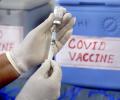
As India prepares to launch its vaccine drive on January 16, here is a look at the options:

The research would lead to a better understanding of metabolic reprogramming and aid the development of better therapeutics to deal with the viral pandemics, an institute spokesperson said on Wednesday.

Did you know that ethical hackers earn anything between Rs 800 to Rs 1,000 per hour?
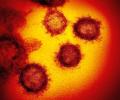
The new lineage called B.1.618 is distinct from the B.1.617, also known as the 'double mutant' virus that contains two mutations, E484Q and L245R, and is believed to be behind the powerful second COVID-19 wave sweeping through India.
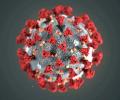
While some reports claim the mutation is capable of enhancing the infectivity of the virus, this is not well established and also does not necessarily indicate more virulence or harmfulness of the disease.

The annual award includes a pure gold medal, a citation and a prize purse worth $ 100,000 or its equivalent in the Indian rupees.
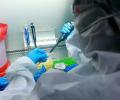
Doses of the vaccine were given to 1,077 healthy adults aged between 18 and 55 in five United Kingdom hospitals in April and May as part of the phase one clinical trial.
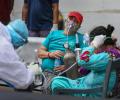
As the Omicron strain spreads across the globe and questions on vaccine inequity dominate discussions, scientists are still scrambling to learn more about emerging variants of the deadly virus that has claimed millions of lives and crippled economies.
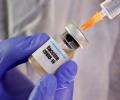
Early data from its vaccine candidate 'mRNA-1273' showed it produced protective antibodies in a group of eight healthy volunteers, Moderna said. The other closely watched COVID-19 vaccine is the one being developed by scientists at Oxford University.
'The deaths of the children in the Gambia would batter India's reputation as the developing world's pharmacy.'

'You are dealing with a small gang of semi-literate terrorists. These are guys flying kites.' 'There is huge difference between flying kites and actually having a deliverable, executable, plan.'

I suggest we build a Vigyan Mandir (Temple of Science) with the ambience of a place of worship, so that it becomes a destination for pilgrims. We should embed on its walls bronze plaques describing each scientist mentioned here along with about a dozen of our ancient mathematicians, recommends Professor Kalyan Singhal, historian of science and technology.

Dr Shreekant Sambrani pays tribute to M S Swaminathan, renowned agricultural scientist and a lifelong crusader against hunger who passed away in Chennai recently.

The Omicron variant carries 'concerning' mutations that may make it more transmissible and allow it to evade immunity, scientists said on Monday, stressing that the one certainty in the uncertainty of the many things unknown is this -- COVID is not a short-term crisis and vaccines are still a critical tool.
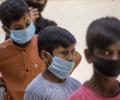
Though there is enough anecdotal evidence of COVID-19 catching children -- early teens and younger -- there is little reason to panic, said several doctors and scientists. They also stressed on the urgent need to vaccinate children to stem the spread of the infection.
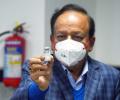
500 million doses per annum from its two sites in Hyderabad and 200 million doses each from its Ankleshwar and Kolar facilities.

In addition to the attack helicopters, the contract also includes fire control radars; Hellfire Longbow missiles; stinger Block I-92H missiles; night vision sensors and inertial navigation systems.

The Central Drugs Standard Control Organisation has granted restricted emergency use authorisation to two new vaccines and a drug for COVID-19, taking the number of preventives and treatments available in India to 12.

Indian scientists who wrote to the PM last week are not entirely rejecting GMOs but instead asking for caution and further testing to establish their safety.

Over 5 million alumni from the Indian Institutes of Technology, Mumbai University and Institute of Chemical Technology, Mumbai, plan to raise Rs 21,000 crore to start the world's largest infection testing lab in Mumbai.
